
10 Interesting Facts About the Hungarian Holy Crown
- v. Balázs Róbert

- Jul 29, 2025
- 3 min read
On the occasion that, hopefully in the near future, Hungarians living in the United Kingdom will also be able to take pride in a certified replica of the Hungarian Holy Crown, crafted with exceptional precision and detail, here are a few fascinating facts that may still be unfamiliar to some

You can read more about our announcement by clicking on the link below: https://www.vitezirend.co.uk/en/hireink/felhivas---szent-korona-az-egyesult-kiralysagban
Did you know that...?
1. It Had an Investiture Role
The Holy Crown was used exclusively for the official consecration of Hungarian monarchs. It was not worn during everyday affairs, nor on private or family occasions. Its use was strictly limited to the coronation ceremony itself.

2. It Consists of Two Distinct Parts
The Crown is composed of a lower (Greek-origin) and an upper (Latin-style) section. The lower part is formed by an ornate circlet, while the upper part consists of gold bands adorned with rows of gemstones. The cross on the top was most likely added only in the 16th century.

3. A Prerequisite for Lawful Reign
According to tradition and historical law, only those crowned with the Holy Crown in Székesfehérvár by the Archbishop of Esztergom were regarded as lawful kings of Hungary. However, Saint Stephen himself was neither crowned in that location nor with the Crown as we know it today. Over time, the site of coronations changed—due to the Ottoman occupation, ceremonies were later held in Pressburg (now Bratislava), Sopron, and eventually Buda. The last coronation took place in Budapest in 1916.

4. Queens Also Took Part in the Ceremony
Queens were also "crowned", but the crown was not placed on their heads. Instead, it was touched to their right shoulder, symbolising their role alongside the king in the governance of the state.

5. It Was Taken Abroad Multiple Times
Throughout its history, the Holy Crown was taken out of the country at least eleven times, most frequently to Vienna. The longest period it spent abroad was over three decades, between 1572 and 1608.


6. Public Display in Sopron
In 1622, Stanislaus Thurzó, the Palatine, surprisingly presented the Crown to the public in Sopron: after opening the crown chest, he raised the artefact in the window of the town hall for the people to see.

(Source: National Széchényi Library)
7. The History of the Tilted Cross
Although many believe the cross on the Crown has always been tilted, the earliest depictions show it as straight. It was likely damaged in 1638, during the hurried preparations for a coronation, when the case holding the Crown had to be forced open due to the absence of the proper key.

8. Buried After the Surrender at Világos
In 1849, following the defeat of the Hungarian Revolution, Bertalan Szemere hid the Crown and the coronation regalia underground near Orsova to prevent them falling into Austrian hands. They were discovered in 1853. The Crown survived the time intact, but the sword had become heavily rusted.

9. Evacuation During the Second World War
In 1945, at the end of the war, the precious relic was evacuated to Austria, where it was concealed inside a petrol barrel. It was discovered by the American army and kept for several years at the Fort Knox military base in Kentucky.
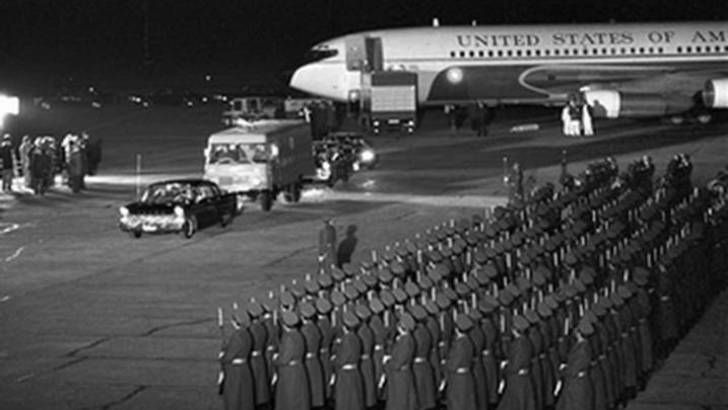
10. Return from America
In January 1978, the United States returned the Holy Crown to Hungary. At the ceremonial handover, it was not the Party leader but the Speaker of the National Assembly who received it. The condition was that the Crown must not fall into the hands of any other country—such as the Soviet Union. Among the American delegation was Albert Szent-Györgyi, who returned to Hungary briefly at the same time.

The Hungarian Holy Crown is the only existing "Holy" crown in the world... the crown of peace, the crown of love and the Nation.


Comments