
29 August 1944 – The new Prime Minister of Miklós Horthy's government: Vitéz, Noble Géza Lakatos of Csíkszentsimon

On 29 August 1944, Horthy formed a new government in order to prepare Hungary’s exit from the war. The Sztójay cabinet was replaced by a new government led by Géza Lakatos.
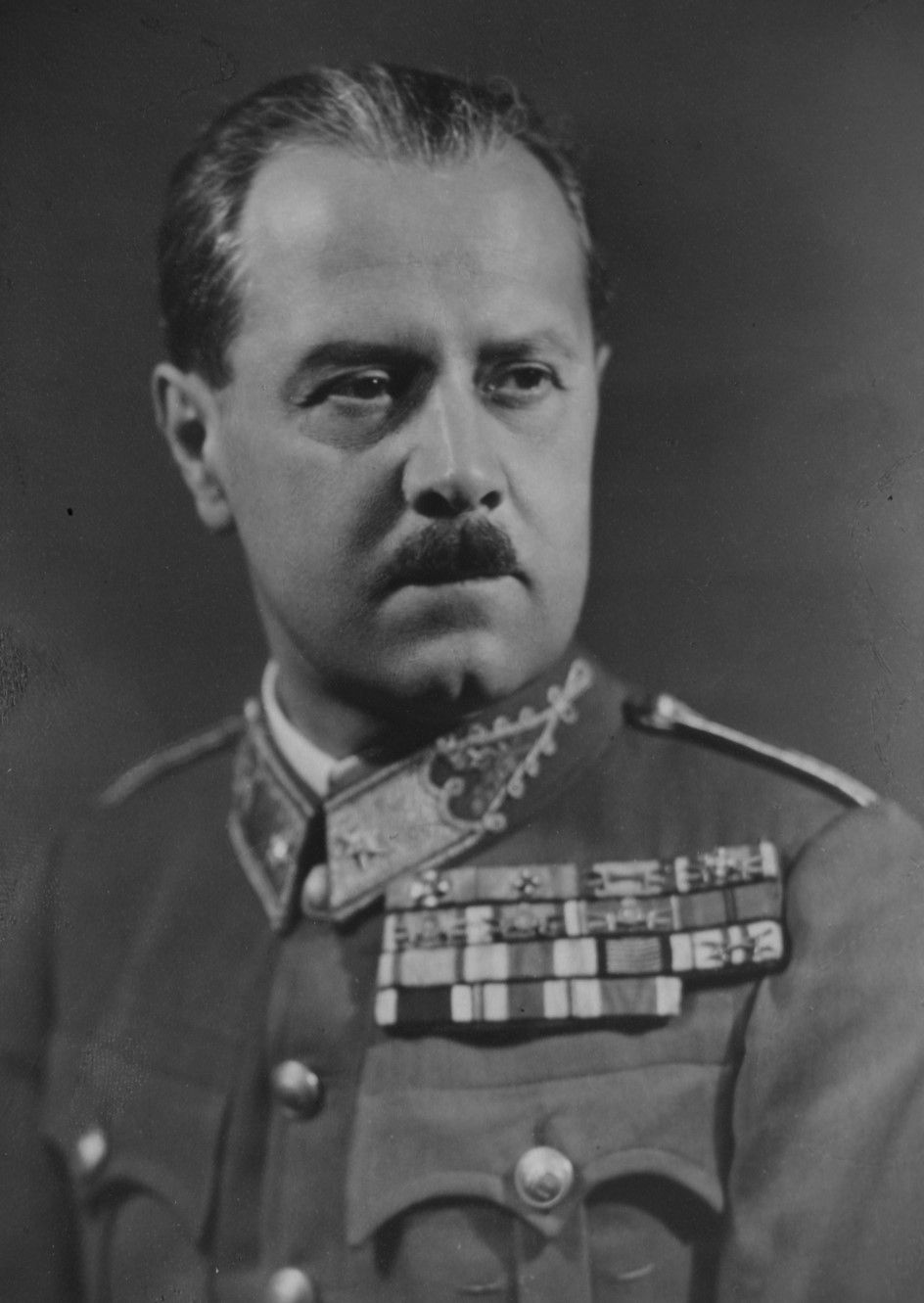
But who was Géza Lakatos?
Géza Lakatos graduated from the Ludovica Military Academy in 1910, where he was commissioned as a second lieutenant. He served with the 1st Budapest Honvéd Infantry Regiment, and later with the infantry regiment in Linz. In 1914, he was admitted to the War Academy in Vienna, which was dissolved upon the outbreak of the First World War. He was then deployed to the Russian front, and from December 1915 to November 1916, he served as a general staff officer in a brigade of the joint Austro-Hungarian army. Between 1917 and 1918, he fought on the Italian front. During the time of the Hungarian Soviet Republic, in May 1919, he served at the Gödöllő headquarters of the Red Army, before joining Miklós Horthy’s “National Army.”
After completing the War Academy in 1921, he taught tactics and military organisation at the Ludovica Academy. From 1923, he worked in the intelligence and reconnaissance division of the General Staff. In 1925, he was granted the title of vitéz (a Hungarian order of merit), and from 1928 he served as military attaché at the Hungarian embassy in Prague. In 1934, he became a regimental commander, in 1935 Chief of the General Staff, then a general in 1939, a lieutenant general in 1941, and in 1943, a full general. Horthy intended to appoint him as commander-in-chief of the armed forces, but the position was never formally established.
After the fall of the pro-German Sztójay government, on 29 August 1944, Horthy appointed Géza Lakatos as Prime Minister, secretly entrusting him with preparing Hungary’s withdrawal from the war and negotiating an armistice.
His government dismissed the state secretaries responsible for the deportations and removed far-right politicians, although some German agents were also included in the cabinet. These agents were fully informed of Hungary’s planned exit from the war.
In early October 1944, the Germans declared that Hitler wanted Ferenc Szálasi to become Hungary’s new Prime Minister. After the failed attempt to exit the war on 15 October, Lakatos was taken prisoner by the Germans.
On 2 January 1945, he was arrested and imprisoned in Sopronkőhida. He was released on 28 January but placed under internment in Sopron. After the Soviet occupation, in April 1945, he was taken to Kiskőrös, where he was subjected to repeated interrogations. He was released in January 1946 and later appeared as a witness in several people’s tribunal cases.
In 1949, he was stripped of his pension and had his land confiscated. As a result, he was forced to move to Budapest, where he supported his family by illustrating books and painting silk scarves.
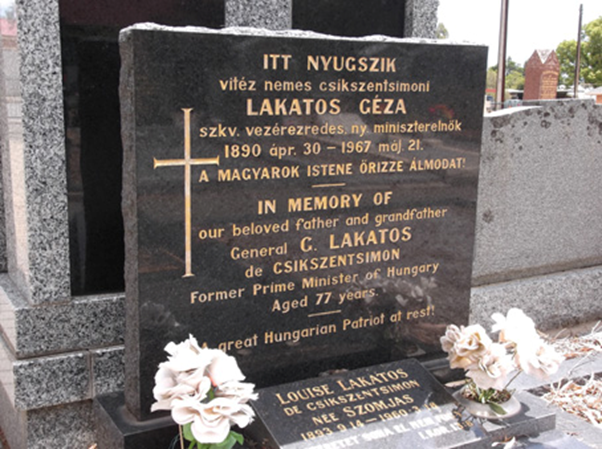
In 1965, with the permission of the Hungarian authorities, he was allowed to travel to Australia to join his daughter, who had been living there since 1957. He died two years later, in 1967.
(writer: v.Babenyecz Attila)


Comments